
Get in Touch

Edit Template

BioDiesel

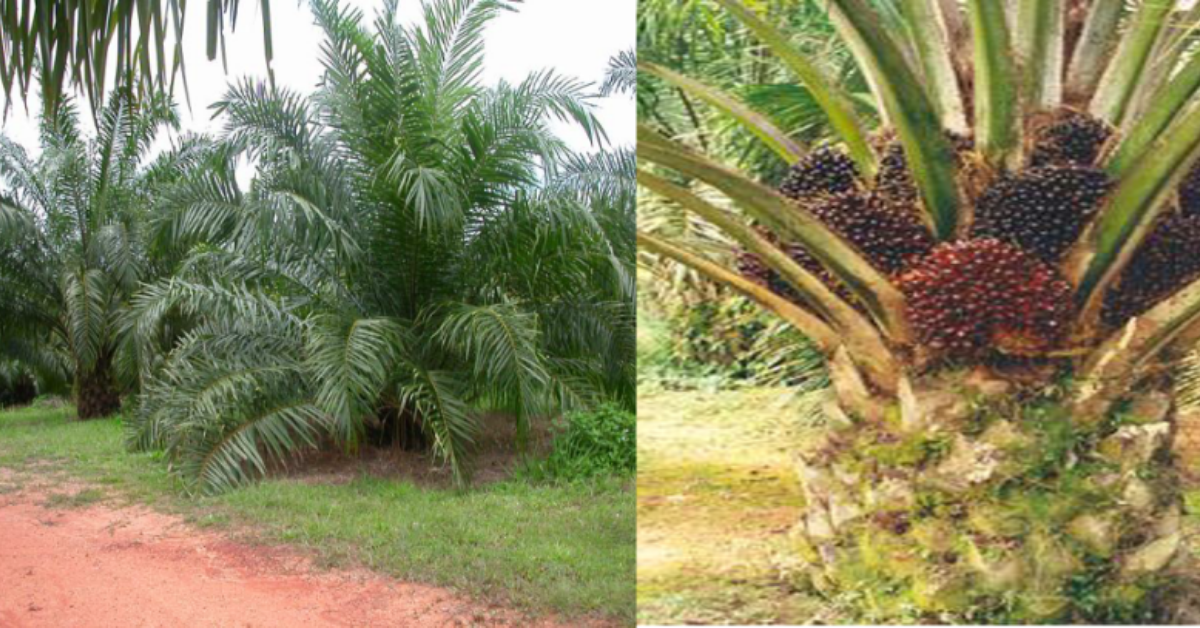
Biodiesel is a renewable fuel derived from vegetable oils and fats through refining and conversion processes that enhance its suitability for industrial and energy applications. In the palm oil value chain, two important feedstocks widely utilized for biodiesel production are High Acid Crude Palm Oil (HACPO) and Palm Fatty Acid Distillate (PFAD).

High Acid Crude Palm Oil (HACPO)
Palm Fatty Acid Distillate (PFAD)

Description:

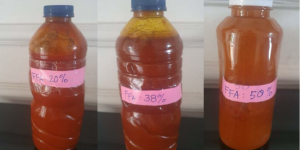
High Acid Crude Palm Oil (HACPO) is a grade of crude palm oil characterized by elevated Free Fatty Acid (FFA) content, typically above standard edible CPO specifications. Due to its high acidity level, HACPO is generally unsuitable for direct food applications but serves as a valuable industrial feedstock, particularly for biodiesel production through esterification processes.

Key Characteristics:

  • High Free Fatty Acid (FFA) content (commonly >5–20% or higher)

  • Reddish-orange to dark brown liquid

  • Derived from palm fruit processing with longer storage or specific handling conditions

  • Suitable for acid esterification and transesterification conversion

Applications:

  • Primary feedstock for biodiesel production

  • Raw material for fatty acid and oleochemical manufacturing

  • Industrial energy applications (after processing)

  • Blending component for downstream palm-based products

HACPO plays an important role in maximizing palm oil resource utilization by converting lower-grade, high-acidity oil into valuable renewable energy and industrial products, supporting efficiency within the palm-based circular economy.
Description:

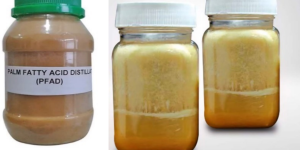
Palm Fatty Acid Distillate (PFAD) is a by-product generated during the physical refining of crude palm oil. It consists primarily of free fatty acids separated from crude oil during the deodorization stage. Although not suitable for direct food use, PFAD is a valuable industrial feedstock widely utilized in biodiesel and oleochemical production.

Key Characteristics:

  • Very high Free Fatty Acid (FFA) content (typically >70–90%)

  • Brownish semi-solid or liquid, depending on temperature

  • By-product of palm oil refining (deodorization process)

  • Contains minor components such as neutral oil, tocopherols, and sterols

Applications:

  • Feedstock for biodiesel production

  • Raw material for fatty acids and soap manufacturing

  • Oleochemical and surfactant production

  • Industrial fuel applications (after processing)

PFAD enhances value-chain efficiency by converting a refining by-product into renewable energy and industrial raw materials, contributing to more sustainable and circular utilization of palm oil resources.


Banner Title

Lorem Ipsum is simply dumy text of the printing typesetting industry lorem ipsum.

Hot

Your Business Potential with Our Proven Strategies

Unlock your business potential with our expert, results-driven strategies.

Contact Us
Lorem Ipsum is simply dumy text of the printing typesetting industry lorem ipsum.

KISEN: Innovating solutions in IT, Trading, MICE, Consulting & HR.

Company

About Us

Contact Us

Blog

Help

Privacy Policy

Terms

Conditions

Subscribe

Get in touch with us today!

You have been successfully Subscribed! Ops! Something went wrong, please try again.

© 2024 PT Kreatif Inovasi Sentosa