Indonesia is beginning to see waste differently — not as a problem, but as an opportunity.
As the economy grows, so does energy demand and waste generation. Instead of following the old linear model (take–use–dispose), Indonesia is slowly shifting toward a circular economy approach: reuse materials, recycle resources, and recover energy.
Turning Waste into Fuel
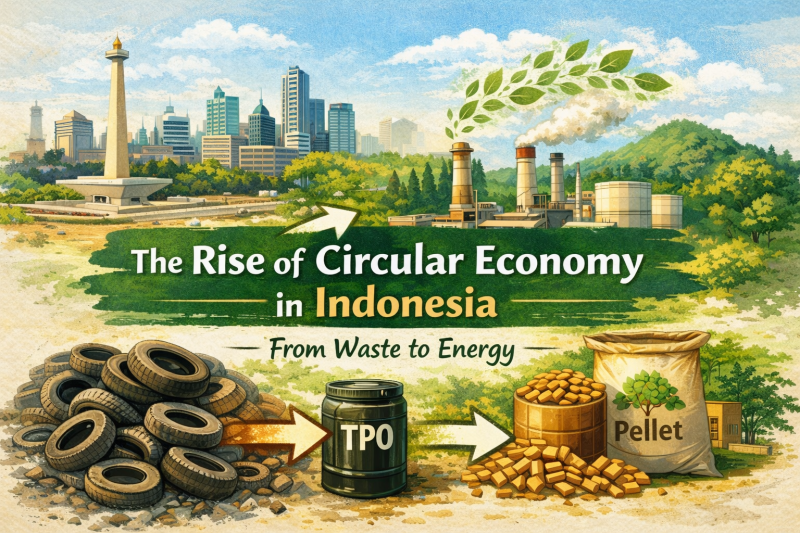
Millions of used tires are produced every year. Through pyrolysis technology, these tires can be converted into:
- Tyre Pyrolysis Oil (TPO) – alternative industrial fuel
- Recovered carbon black
- Recycled steel
This reduces landfill waste while supplying alternative energy to industries.
Biomass from Wood Residues
Indonesia also produces large amounts of wood waste from forestry and sawmills. These residues can be processed into wood pellets, used for co-firing in power plants and industrial boilers, especially in countries like Japan and South Korea.
The key challenge? Ensuring the biomass truly comes from waste and certified sources.
Why It Matters
Indonesia’s circular transition shows that developing economies can:
- Reduce waste
- Create new energy solutions
- Support global sustainability goals
From scrap tires to wood residues, Indonesia is proving that waste can become value — and energy can come from unexpected places.